The Power of a Physical Wristwatch: Reclaiming Time in a Digital World
The Power of a Physical Wristwatch: Reclaiming Time in a Digital World
In the mid-2000s, a strange thing happened: we all stopped wearing watches. With the advent of the smartphone, the "wristwatch" began to feel like an unnecessary vestige of the 20th century. Why strap a single-purpose tool to your wrist when you have a pocket-sized supercomputer that automatically syncs to the atomic clock?
For nearly a decade, my own wrist was bare. But recently, as I found myself falling deeper and deeper into the "scroll-hole" every time I just wanted to know if it was time for lunch, I decided to conduct an experiment. I bought a simple, analog watch. No notifications, no heart rate monitor, no GPS. Just three hands and a dial.
The results were transformative. It turns out that a wristwatch isn't just a way to tell time; it’s a way to own your time. As a biohacking enthusiast and productivity nerd, I’ve spent years looking for the "perfect" app to manage my focus. It turns out the best tool was invented in the 15th century.
The "Time-Check" Trap: Why Your Phone is a Productivity Killer
We’ve all been there. You’re in the middle of a focused task—maybe you’re writing a report or playing with your kids—and you want to know what time it is. You pull your phone out of your pocket.
In the 1.5 seconds it takes to check the time, you also see:
- A notification that your "friend" from high school just posted a photo of their avocado toast.
- An "urgent" email about a 20% off sale on socks.
- A red bubble on your messaging app.
Before you know it, fifteen minutes have vanished. You’ve checked the time, yes, but you’ve also successfully derailed your "flow state." This is the "Time-Check Trap." By using your phone as your primary timepiece, you are essentially inviting a casino full of distractions to tap you on the shoulder every time you want to orient yourself in the day.
A physical watch eliminates this friction. When you look at your wrist, you get the time—and only the time. There is no context-switching, no dopamine loop, and no "checking just one thing." It is a surgical strike of information that leaves your focus intact.
"A wristwatch is a boundary. It is a declaration that you are the master of your attention, not the slave of your notifications." — Jordan Smith
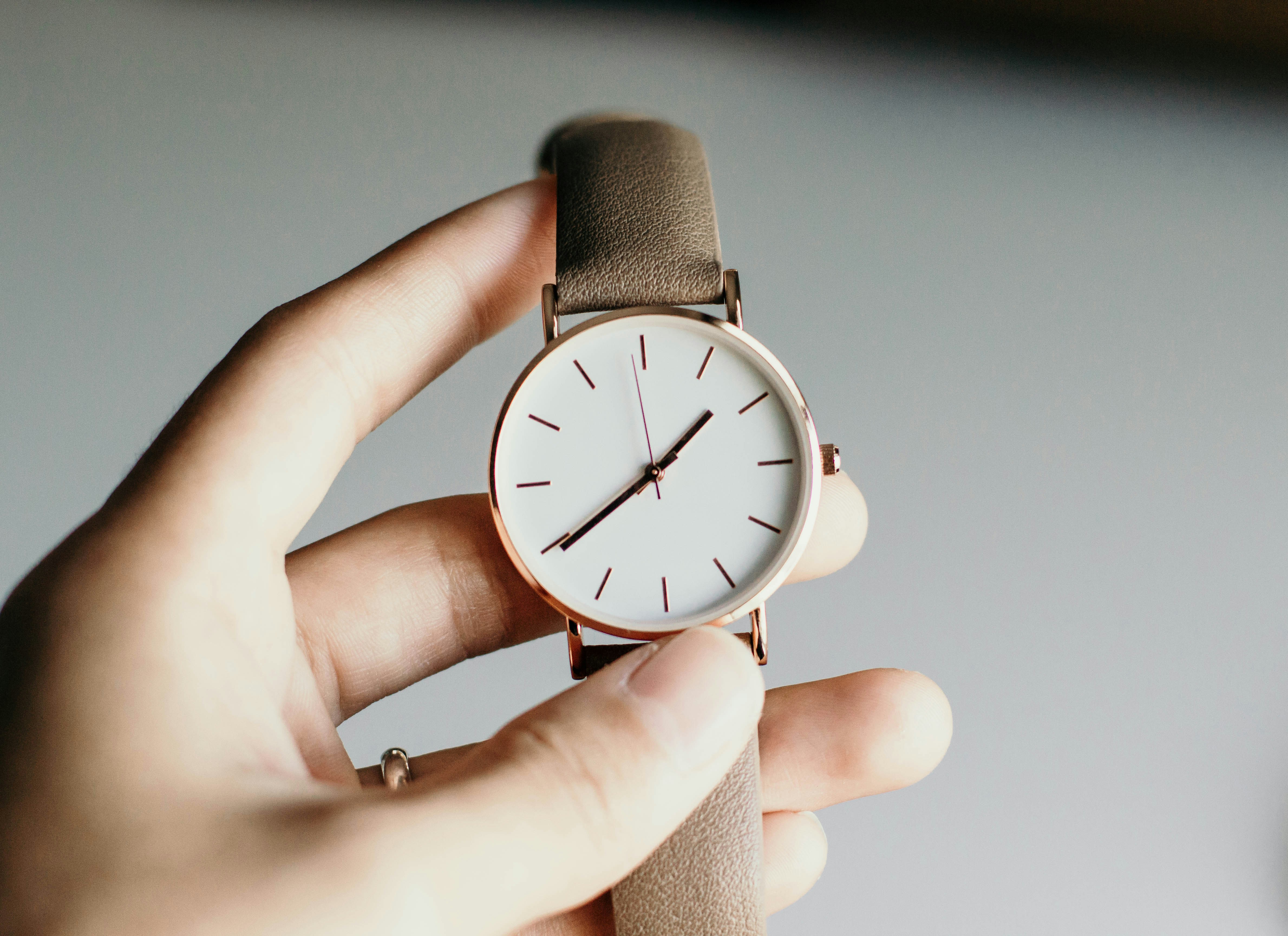
The Psychology of the Analog Dial
There is a profound psychological difference between a digital clock (like the one on your phone) and an analog dial. A digital clock tells you the moment. It says "10:43." It is precise, but it is also abstract. It doesn't give you a sense of where you are in the larger structure of the hour.
An analog watch, however, provides a visual representation of time as a quantity. When you see the minute hand at the 45-minute mark, you don't just see a number; you see a "pie" of time. You see how much of the hour has passed and how much is left. This spatial representation of time is much more aligned with how our brains naturally process duration.
For those struggling with "time blindness" (a common trait in ADHD and high-stress environments), the analog watch is a vital external scaffold. It makes time visible. It allows you to "see" the deadline approaching or the afternoon slipping away in a way that a digital readout never can. It transforms time from a series of disjointed numbers into a continuous, flowing landscape.
Reclaiming the "Present" through Haptic Awareness
Wearing a watch provides a constant, subtle haptic reminder of the passage of time. The weight of the watch on your wrist is a sensory anchor. It grounds you in the physical world.
I’ve found that the simple act of "checking my watch"—a physical gesture that involves rotating the wrist—is much more intentional than the mindless "reach and tap" of a smartphone. It’s a ritual. It brings you back to the present moment. It forces a micro-second of reflection: "What am I doing right now? Is this how I want to be spending this hour?"
The Beauty of the Single-Purpose Tool
In our world of multi-functional everything, there is a quiet dignity in a tool that does one thing perfectly. A watch doesn't try to be your therapist, your trainer, or your social secretary. It just keeps the beat.
This simplicity has a calming effect on the nervous system. When we are constantly bombarded by devices that can "do anything," our brains are in a state of perpetual readiness for any type of information. A watch provides a reprieve from this cognitive load. It is a "closed system." There is a beginning and an end to your interaction with it.
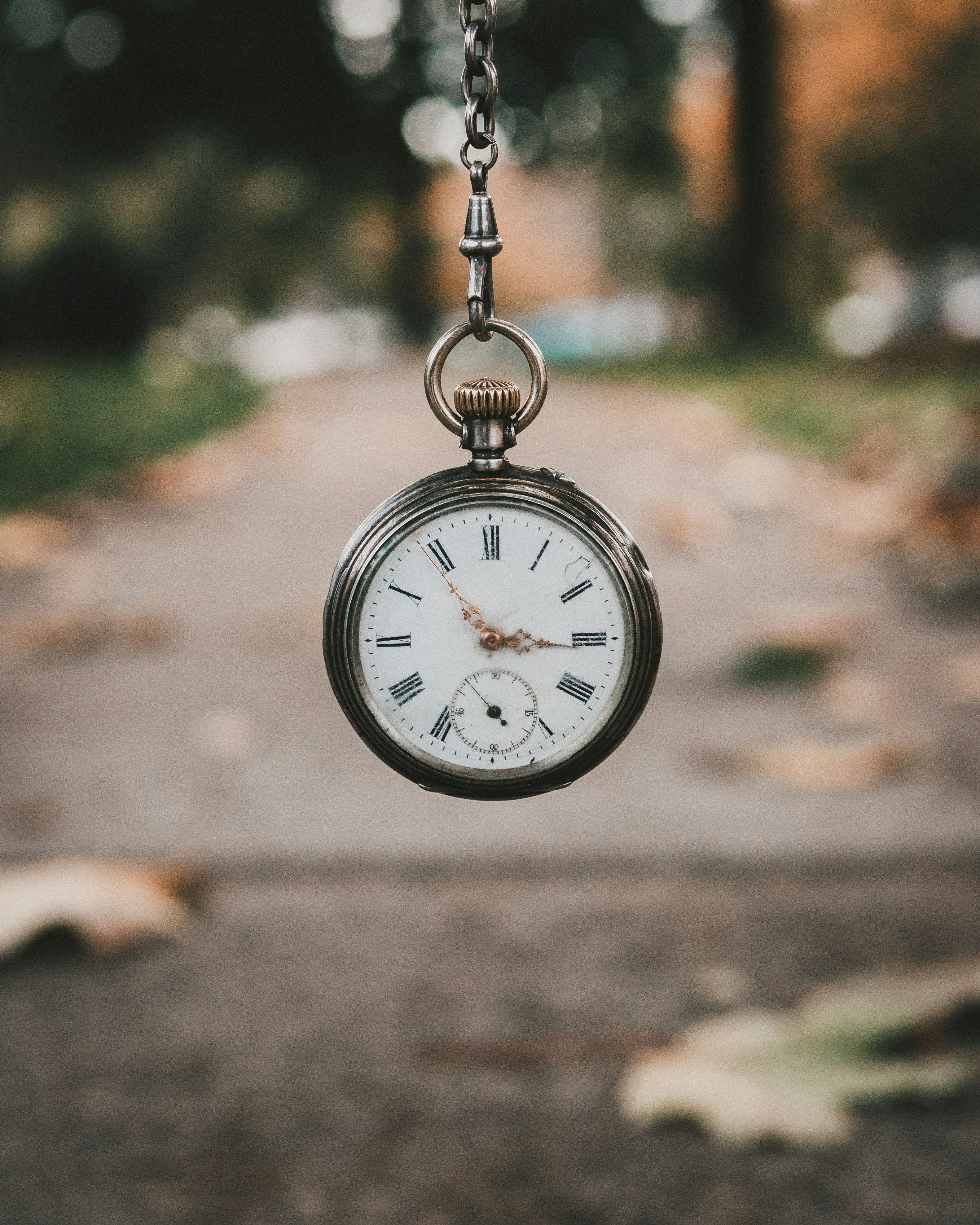
The Watch as a "Biohack" for Anxiety
Many of my clients suffer from what I call "Time Anxiety"—the constant, nagging feeling that they are "behind" or that they don't have enough time. Much of this is fueled by the frantic, "blinking" nature of digital time.
Switching to an analog watch can significantly lower this anxiety. Because the movement of the hands is so slow, it creates a perception of time as being more expansive. Have you ever sat and watched the minute hand of a watch? It moves almost imperceptibly. This slow, steady progress is the opposite of the "hurry-up" culture we live in.
By aligning your perception with the slow, mechanical rhythm of a watch, you begin to realize that an hour is actually a significant amount of time. You stop "racing" the clock and start "pacing" yourself with it.
Actionable Advice: How to Re-Enter the World of Watches
If you’re ready to reclaim your wrist, here’s my "No-Tech" guide to choosing and using a watch:
- Go Analog: If the goal is focus and time-perception, skip the smartwatch. You don't need another screen on your body. Choose a traditional dial with hands.
- Mechanical vs. Quartz: Mechanical watches (which use gears and springs) have a "soul" and a sweeping second hand that is incredibly soothing to watch. Quartz watches (battery-powered) are more accurate and require less maintenance. Both are great; choose the one that you’ll actually enjoy wearing.
- The "Morning Wrist" Ritual: Put your watch on first thing in the morning. Let it be the signal that your "productive day" has begun.
- Practice "Time Mapping": When you start a task, look at your watch. Notice where the minute hand is. Tell yourself, "I will work until the hand reaches the six." This turns the watch into a visual "finish line."
- Leave the Phone Behind: Use your watch as an excuse to leave your phone in another room more often. If you have the time on your wrist, you don't "need" your phone for errands, walks, or short breaks.
Key Takeaways
- Focus Preservation: A watch provides the time without the "notification trap" of a smartphone.
- Spatial Perception: Analog dials help the brain visualize time as a quantity, aiding in better time management.
- Reduced Anxiety: The slow, steady movement of watch hands combats the "frantic" feeling of digital time.
- Cognitive Reprieve: Single-purpose tools reduce the cognitive load of multi-functional devices.
- Physical Grounding: The weight and ritual of a wristwatch keep you anchored in the physical "now."
Conclusion: Reclaiming Your Most Precious Asset
Time is the only resource we have that is truly finite. We can always earn more money, buy more things, or find more information. But we can never get back a single lost second.
By wearing a wristwatch, you are showing respect for your time. You are acknowledging that your attention is valuable and that you aren't willing to trade it for the cheap dopamine of a smartphone screen. You are choosing to live in a world where time is a steady, visible, and manageable companion rather than a hidden, digital master.
So, do yourself a favor. Find a watch that you love. Strap it on. And start owning your hours again.
Further Reading
About the Author: Jordan Smith is a Biohacking Enthusiast and productivity coach who spends his time exploring the intersection of ancient wisdom and modern performance. He owns seven watches, including a 1960s mechanical diver that he claims keeps him "more on track than any app ever could." His favorite color is 'Dopamine Yellow,' but his favorite sound is the quiet tick of a well-made movement.