The Power of a Physical Cookbook: Reclaiming the Kitchen from the Digital Screen
The Power of a Physical Cookbook: Reclaiming the Kitchen from the Digital Screen
Picture this: You’ve found a recipe for a stunning lemon herb roasted chicken on a popular food blog. You’ve got your ingredients laid out, your oven is preheating, and your tablet is propped up against a bag of flour. You start chopping onions. Your hands are covered in that thin, papery skin and a bit of onion juice. Suddenly, your tablet screen goes dark. You try to tap it with your knuckle, but it doesn't recognize the gesture. You wipe your hand on a towel, unlock the screen, and—BAM!—a giant pop-up ad for car insurance covers the ingredients list. You try to X it out, but your finger is still a bit damp, and you accidentally click the ad, which opens a new browser tab.
Does this sound familiar? In our quest for digital convenience, we’ve turned the kitchen—once a sanctuary of tactile craft—into another battleground for our attention. We’ve traded the grease-stained pages of a family heirloom for the flickering blue light of a smartphone, and in the process, we’ve lost something vital.
As someone who has spent years oscillating between the latest cooking apps and the dusty shelves of used bookstores, I’m here to make a case for the physical cookbook. It’s not just about nostalgia; it’s about focus, creativity, and the sheer joy of being unplugged.
The Sensory Joy of Paper and Ink
Cooking is a multi-sensory experience. We smell the garlic hitting the oil, we feel the weight of the chef’s knife, we hear the sizzle of the pan. Adding a physical book to this mix completes the sensory loop. There is a specific, grounding weight to a hardcover cookbook. The texture of the paper—whether it's glossy and high-end or matte and utilitarian—provides a tactile anchor that a glass screen simply cannot replicate.
When you open a physical book, you are engaging with an object that has a beginning, a middle, and an end. You can flip through the pages and see the "rhythm" of the recipes. You can see the stains from that time you got too enthusiastic with the tomato sauce, or the dog-eared corner on the page of the chocolate cake you make every birthday. These aren't "bugs" or "damage"; they are the metadata of your life. They are the physical evidence that you have lived and loved in your kitchen.
"A cookbook is more than a list of instructions; it is a map to a memory. When we cook from a book, we are joining a conversation that spans generations." — Alex Rivera

The Digital Detox in the Kitchen
We spend an average of seven hours a day looking at screens. For many of us, the kitchen is one of the few places where we can actually justify putting the phone away. But when we use digital recipes, we are inviting the entire internet into our workspace.
Every time you look at your phone to check the roasting temperature, you are also seeing the three Slack notifications from work, the "urgent" news alert about a celebrity's haircut, and the reminder that you haven't posted on Instagram in three days. This "context switching" is a silent killer of mindfulness. It keeps your brain in a state of high-alert, making the act of cooking feel like another task to be managed rather than a hobby to be enjoyed.
By using a physical cookbook, you create a "digital-free zone." You leave the phone in the other room. Suddenly, the kitchen feels larger. The sounds are clearer. You aren't just "executing a recipe"; you are cooking. This shift from consumption to creation is one of the most effective ways to combat the mental fatigue of the modern world.
The Curation of Expertise vs. The Chaos of the Algorithm
One of the biggest lies of the digital age is that "more information is always better." When you search for "Best Lasagna Recipe" on Google, you are presented with 45 million results. How do you choose? Usually, you pick the one that has the best SEO, the most aggressive marketing, or the longest preamble about the author's summer in Tuscany.
A cookbook, however, represents a curated body of work. An author, an editor, and a test kitchen have put their reputations on the line for these specific recipes. There is a narrative thread that runs through a good cookbook. You begin to understand the author's palate, their shortcuts, and their philosophy. You develop a relationship with the book.
When you cook through a book, you aren't just jumping from one random internet person to another. You are learning a style. You are building a foundation. This leads to a much deeper understanding of the "why" behind the "how." You start to notice patterns: why this author always starts with a cold pan, or why they prefer lemon zest over juice. This is how you move from being a "recipe follower" to being a "cook."
The Aesthetics of Inspiration
Let’s talk about the photography. Food blogs are often optimized for mobile screens, meaning the photos are bright, saturated, and designed to grab your eye as you scroll. Cookbook photography, especially in recent years, has become an art form. These are images designed to be lingered over. They capture the mood, the light, and the culture surrounding the food.
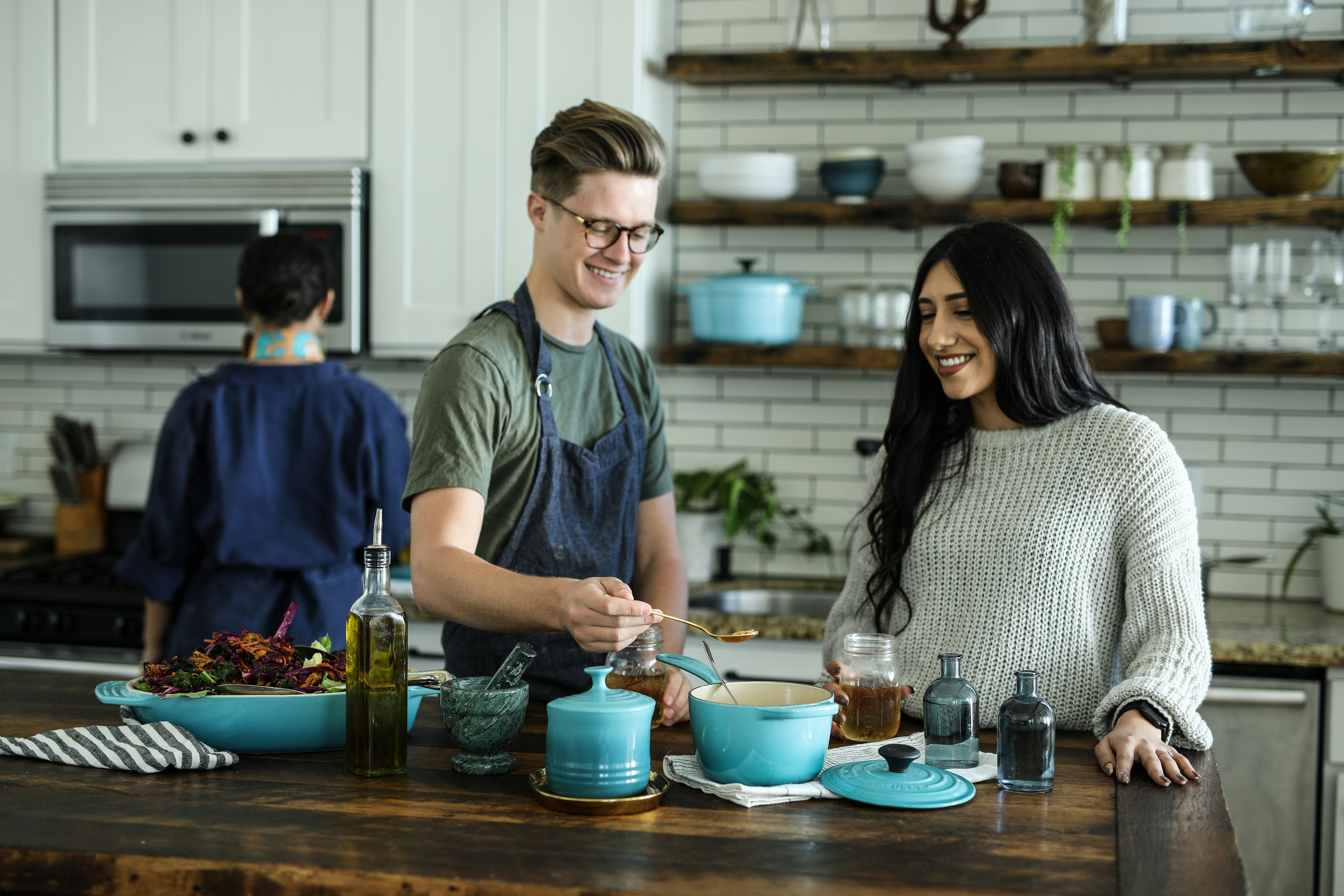
Having a beautiful cookbook open on your counter isn't just about the instructions; it’s about the inspiration. It changes the atmosphere of the room. It makes the act of preparing dinner feel like an event.
The Durability of the Analog
There is a practical side to this, too. A cookbook doesn't need to be charged. It won't shatter if you drop it (though it might get a bit bruised). It doesn't require a Wi-Fi connection. If the power goes out and you're cooking on a gas stove, your cookbook is still there, ready to guide you.
And perhaps most importantly, a cookbook is an heirloom. Have you ever tried to "pass down" a bookmark folder to your children? It doesn't work. But passing down a physical book, complete with your handwritten notes in the margins—"Add more salt," "Used kale instead of spinach," "Dad loved this"—is one of the most beautiful ways to share your history. These books become repositories of family lore. They are the physical containers of the flavors that defined a childhood.
Actionable Advice: How to Build Your Analog Library
If you’ve become a digital recipe addict, here’s how to transition back to the world of paper and ink:
- Start with One "Bible": Don't buy ten books at once. Pick one comprehensive book that covers the basics (think The Joy of Cooking, Salt, Fat, Acid, Heat, or How to Cook Everything). Master the foundations.
- Visit a Used Bookstore: This is where the magic happens. Look for books with notes in the margins. These are books that have been loved. They have "proven" themselves in the field.
- The "One Recipe a Week" Rule: Commit to cooking one recipe from a physical book every week. Make it an event. Turn on some music, pour a glass of wine (or tea), and leave your phone in the bedroom.
- Write in the Margins: This is your book. It is a living document. Don't be afraid to make it yours. If a recipe needs more garlic (and let’s be honest, it usually does), write it down!
- Use Your Books as Decor: Don't hide your cookbooks in a dark cupboard. Keep them where you can see them. A stack of cookbooks is a constant reminder that the kitchen is a place of creativity and joy.
Key Takeaways
- Tactile Connection: The physical weight and texture of a book ground you in the present moment.
- Mental Clarity: Removing the screen eliminates the constant barrage of notifications and ads.
- Deep Learning: Curated cookbooks offer a cohesive culinary education rather than disjointed digital fragments.
- Living History: Marginalia and kitchen stains turn a book into a family heirloom.
- Inspiration: High-quality print photography provides a different level of creative stimulation than digital scrolling.
Conclusion: The Kitchen as a Sanctuary
The kitchen should be a place where we reconnect with the physical world. It is a place of smells, textures, and tastes. By inviting digital screens into this space, we are diluting the experience. We are turning a craft into a chore.
Reclaiming the physical cookbook is a small but powerful way to say "no" to the digital noise and "yes" to the present moment. It is an invitation to slow down, to focus, and to enjoy the process of creation. So the next time you're planning a meal, skip the Google search. Go to your bookshelf, find a book that speaks to you, and let it lead the way. Your dinner will taste better, and your mind will feel lighter.
Further Reading
- The Joy of Hobbies: Why We Need Creative Outlets
- The Power of Building with Your Hands
- Why We Love Stationery Stores: The Sensory Joy of Paper
About the Author: Alex Rivera is a freelance writer and amateur chef who believes that the best recipes are found in books that have at least three flour-covered pages. When he's not in the kitchen, he's usually digging through the "Cooking" section of every thrift store in a fifty-mile radius. His current favorite cookbook is a 1974 edition of 'The Vegetarian Epicure' that smells faintly of nutmeg and adventure.